
Upholstered Bench Fabrics Explained: Velvet, Linen, Boucle and Leather
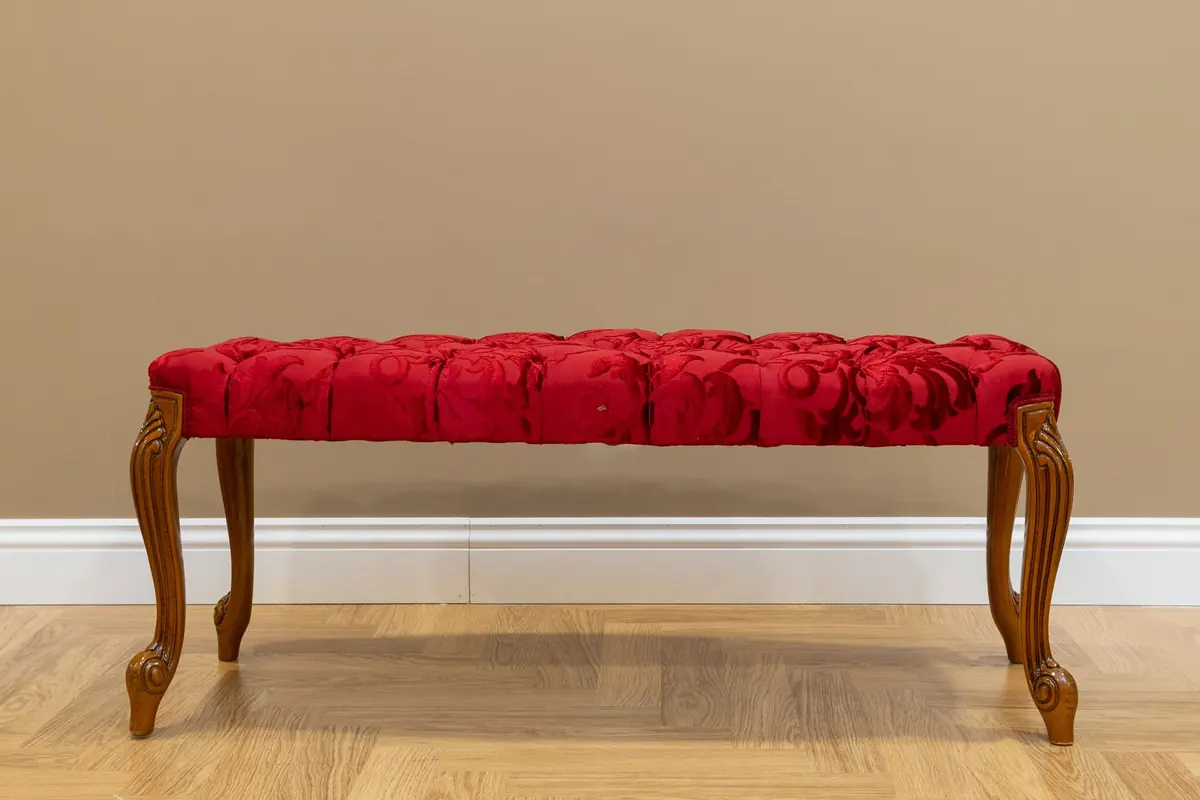
A bench sits where life actually happens: the hallway where shoes come off, the foot of the bed, the window seat that catches the afternoon sun. Where it sits matters more than the swatch you fall for in a showroom. A fabric that looks wonderful on a sample card can pill, crease or stain within a year if it is holding wet coats, school bags and a cat.
Velvet, linen, bouclé and leather are the four you will see most often on upholstered benches, and each behaves quite differently. Here is what each is genuinely like to live with, and how to keep it looking well.
Before you choose: how the bench will be used
Fabric choice starts with an honest look at the job. A bedroom bench that holds a folded jumper for ten minutes a day can carry a delicate cloth happily. A hall bench that takes damp coats and a dog will punish it. Ask yourself:
- How long do people sit? A quick shoe change barely touches the fabric. A window seat used for reading puts weight and friction on the same spot for hours.
- What lands on it? Wet coats, sun cream, coffee, animal claws, bicycle chains, the odd bit of toast.
- What light does it get? Strong sun fades dyes over time, especially on natural fibres and untreated leather.
- Does the top lift? If the bench is a storage box, the fabric flexes along the hinge line every time it opens, so a tight, hard-wearing weave copes better there than a loose one.
In a busy spot, a blend is usually the smartest compromise. Cotton-linen and wool-blend cloths tend to hold their shape better than a pure natural fibre and are easier to spot-clean.
Velvet
Velvet gives a bench presence. It absorbs light, so colours look deep and rich, and it feels warm and soft on the back of the legs — no small thing if you sit down in shorts. Modern polyester and performance velvets are far more forgiving than the old cotton velvets people remember from their grandparents' front room.
The catch is the pile. Velvet has a nap, so it looks different depending on the direction you brush it and the angle you view it from. Handprints, sitting marks and vacuum tracks all show, and on a backless bench the seat shows everything.
Care and cleaning
Vacuum with a brush attachment, working in one direction rather than scrubbing back and forth, then brush the pile back into place. Blot spills instead of rubbing — rubbing crushes the pile and spreads the mark. For anything greasy or coloured, use a foam upholstery cleaner made for pile fabrics, test it on the underside of the seat first, and let it dry fully before sitting. Loose cushion covers are usually best dry cleaned.
Linen
Linen is the relaxed option. It has a matte, slightly slubby texture that reads casual rather than precious, it breathes well in warm rooms, and it softens with use rather than looking worn out. On a window seat or at the end of a bed, a good linen or linen-cotton mix is hard to beat.
It creases. That is the deal, and no amount of pressing will change it. Linen also stretches a little over the years, so a tightly upholstered box bench may look less crisp after a while — an upholsterer can usually retension it. Pale linens show spills and body oils, and liquid wicks along the fibres, so a small spill can spread into a wide ring if you leave it.
Care and cleaning
Blot at once with a clean, dry cloth, working from the outside of the spill inwards to stop it spreading. A mild soap solution — a few drops of washing-up liquid in warm water — on a barely damp cloth handles most food and drink marks. Rinse with clean water and dry with a hairdryer on a cool setting to prevent a ring forming. Vacuum regularly, and rotate a loose cushion so it fades evenly. For a whole-seat clean, call in a professional rather than wetting the bench yourself.
Bouclé
Bouclé is the looped, nubbly cloth you see on curved chairs and textured benches. Its uneven surface hides a great deal: crumbs, small marks, the odd bit of wear at the edges. It adds warmth and texture to a room of smooth surfaces without needing pattern.
The loops are the weakness. A ring, a watch clasp, a cat's claw or a boot zip can pull a loop out, and once it is out you cannot push it back invisibly. Loose weaves also pill where people sit, and heavier bouclés flatten over time on a firm seat. If children or animals will use the bench, look for a tight, low-loop bouclé rather than a big fluffy one.
Care and cleaning
Vacuum gently with a soft brush head — an aggressive brush frays the loops. Never pull a snag; trim it level with sharp scissors and leave it alone. Spot-clean sparingly with a foam cleaner, dabbing rather than rubbing, and let it air dry away from radiators.
Leather
Leather is the practical choice for hard-working benches, especially in hallways and boot rooms. It wipes clean, it does not hold odours the way cloth does, and it gains a patina as it ages — a scuff becomes part of the story rather than a flaw.
It is not indestructible. Cat claws leave permanent marks, and leather in a hot, sunny spot can dry out and crack if it is never conditioned. Untreated aniline leather absorbs spills quickly, while protected, pigmented finishes are far more forgiving. Bonded leather, reconstituted from leather fibres, is much less durable than a full hide, so check what you are actually buying before assuming "leather" means the same thing everywhere.
Care and cleaning
Dust with a dry, soft cloth and wipe with a barely damp one. Use a dedicated leather cleaner and, once or twice a year, a conditioner to keep the surface supple. Keep alcohol-based cleaners, bleach, abrasive pads and furniture polish well away. For a serious stain, particularly on aniline leather, speak to a leather specialist rather than experimenting.
Matching the fabric to the room
- Hallway or boot room: leather, or a tight-weave blended fabric. Pale, loose cloths will need attention weekly.
- Foot of the bed:
Photo: Max Vakhtbovych / Pexels